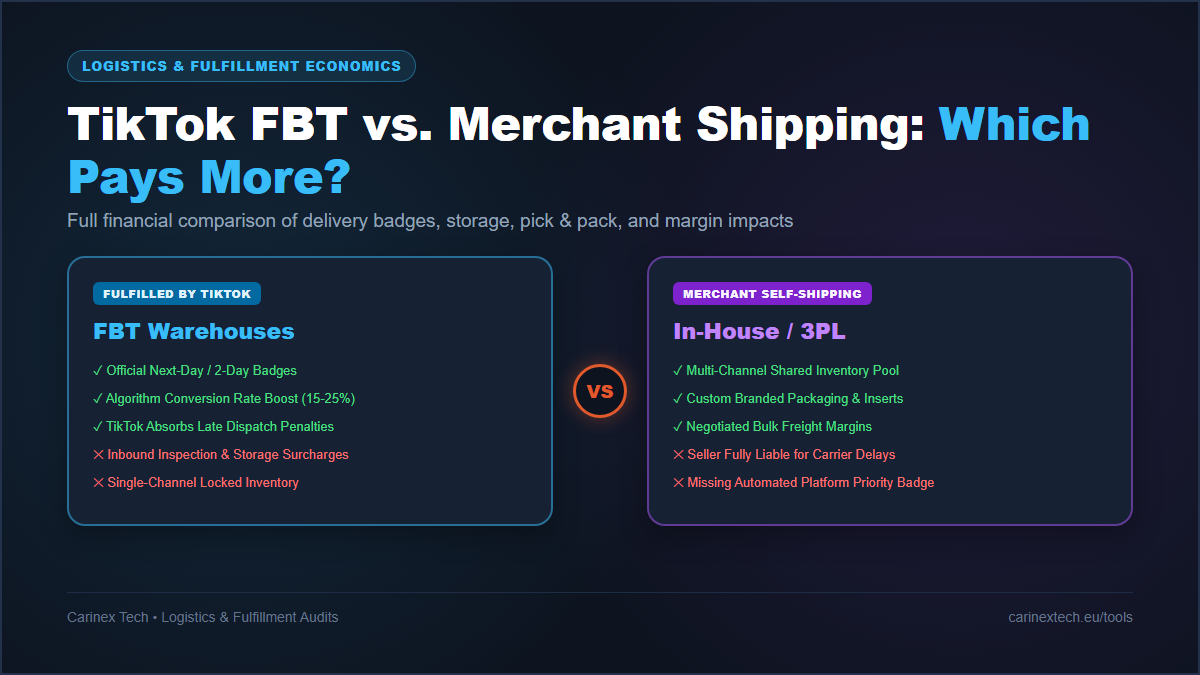
As order volume scales on TikTok Shop, fulfillment becomes the operational bottleneck. Sellers face a critical strategic decision: should you use Fulfilled by TikTok (FBT) or handle order fulfillment independently through self-shipping or a private third-party logistics (3PL) partner?
Both models directly affect your delivery performance ratings and bottom-line profit margins. Let us examine the pros, cons, and financial considerations of each approach.
What Is Fulfilled by TikTok (FBT)?
FBT is TikTok’s automated logistics service, analogous to Amazon FBA. Sellers store inventory within TikTok-partnered warehouse centers, where automated systems pick, pack, and dispatch customer orders as soon as they are placed.
Advantages of FBT
- Algorithmic Visibility: Products fulfilled through FBT often receive preferred algorithmic exposure and priority placement in search tabs.
- Speed & Trust Badges: Listings display fast-shipping badges (e.g., Next-Day or 2-Day delivery), which seller case studies report can lift listing conversion rates by an estimated 15% to 25% during peak promotions.
- Late Dispatch Protection: TikTok assumes responsibility for carrier delays and shipping-related negative customer feedback.
Disadvantages of FBT
- Structured Fee Schedules: Receiving fees, storage costs (which escalate rapidly after 30–60 days), and pick-and-pack fulfillment rates apply to every unit.
- Strict Inbound Compliance: Precise barcode and palletization standards mean improper shipments face processing delays or penalty surcharges.
When Merchant Self-Shipping Is More Profitable
Self-fulfillment (shipping from your own facility or a dedicated 3PL) remains advantageous in several scenarios:
- Oversized or Heavy Products: FBT storage and handling fees on large items quickly erode margins.
- Multi-Channel Inventory: If you sell across Shopify, Amazon, and TikTok simultaneously, keeping unified inventory in a single 3PL avoids fragmented stockouts.
- Custom Packaging & Inserts: FBT limits branding opportunities; merchant shipping allows custom tissue, stickers, and promotional flyers encouraging buyers to join your direct email list.
Compare Fulfillment Costs Side-by-Side
Plug your exact shipping quotes into our calculator to see how carrier costs change your net take-home profit:
The Recommendation for 2026
Most top-tier brands adopt a hybrid fulfillment model: place your top 20% best-selling hero SKUs into FBT for maximum viral reach and algorithm advantages, while fulfilling seasonal items and slower-moving variants through independent shipping partners.
Want this for your business?
Book a free 30-minute call. We’ll look at what you have and tell you honestly what’s worth building.